About the history of the Berlin Prater

We have put together a summary of the most important historical milestones of the Berlin Prater. These brief texts are based on the publication "The Berlin Prater – A Berlin pleasure garden from the 1830s to today" by historian Johanna Niedbalski – the most comprehensive account of the Prater's history to date.

If you would like to learn more, we recommend not only our publications but also the German-language audio walk "SPEKTAKEL zwischen KAFFEEKÜCHE und KLASSENKAMPF" by the artist Caroline Böttcher, which takes you on an acoustic journey through the history of the Berlin Prater.

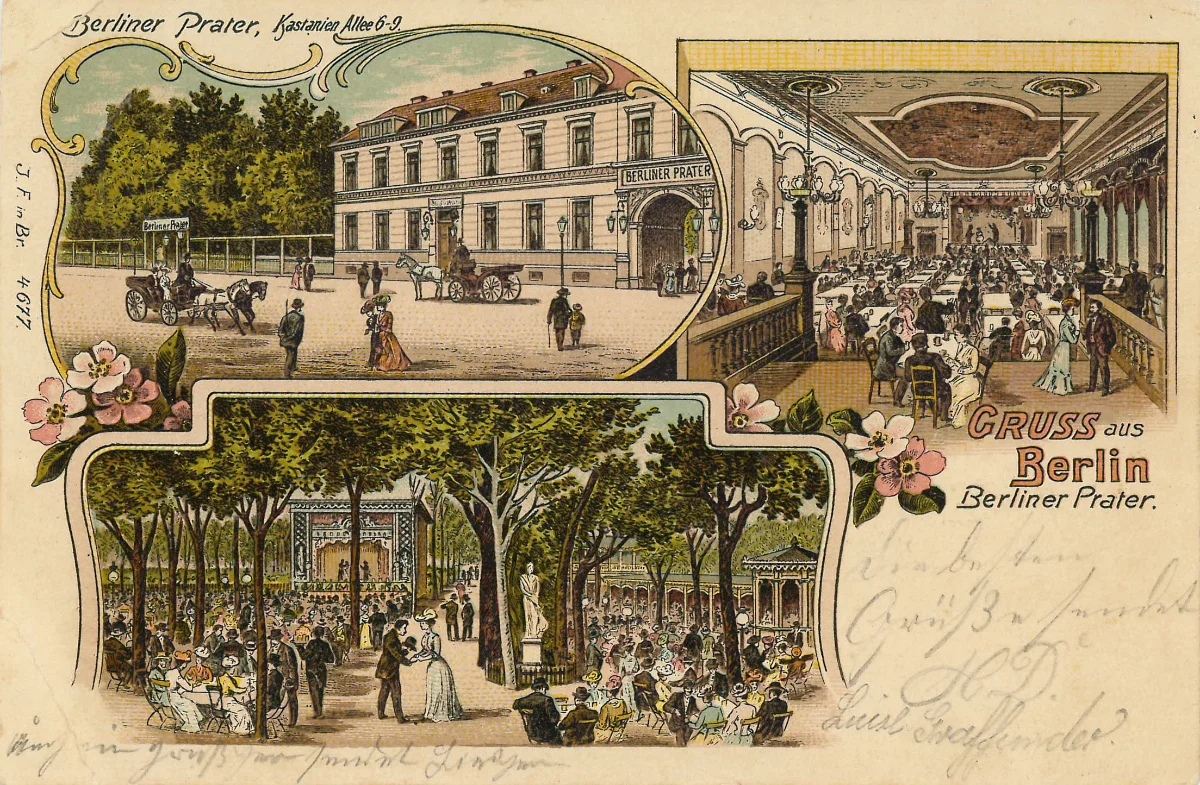
One of the oldest postcards of the Berlin Prater, around 1895. Top left: the facade of the house at Kastanienallee 7 with the gateway entrance. Top right: the dance and event hall. Bottom: the garden with summer stage and open-air hall.
One of the oldest postcards of the Berlin Prater, around 1895. Johanna Niedbalski Collection.

The Beginnings of the Berlin Prater

1831-1895

Opened in the 1830s as a beer garden just outside the city gates, the Berlin Prater has always been a big draw for people seeking relaxation and entertainment in the open air – regardless of class or cultural background. The Prater soon began hosting shows and musical events in the hall and on the open-air stage. Orchestras performed, and countless visitors enjoyed summer theatre performances, afternoon dances, variety shows featuring tightrope acrobatics at dizzying heights and wrestling matches. The billiard salon was also a popular attraction. Renowned artists from far and wide found their way onto the Prater's stages.

This is an image of one of the first postcards depicting the Berlin Prater, dating back to 1895. It shows the Prater façade at Kastanienallee No.7, with the 1875 archway, the dance and events room, as well as the garden with its summer stage, as well as the open-air hall that housed shooting galleries and vendor's booths.

Coffee kitchen in the Berlin Prater around 1905. Two women stand at the counter with jugs and cups; next to them, announcement and price boards hang on the wall.
Coffee kitchen at the Berlin Prater, around 1905. Museum Pankow Archives.

The Coffee Kitchen

1905

'The old custom remains unbroken, families can make coffee here' – proclaims a sign hanging at the entrances to most Berlin garden establishments at the beginning of the 19th century. To bypass the beverage licensing laws, only hot water and the utensils needed for making coffee were provided. Guests had to bring their own ground coffee. This tradition dated back to the 18th century and probably originated in the garden taverns of Treptow. There, migrants from Saxony sold coffee to people out for a stroll. When the Berlin Magistrate denied them a license to serve beverages, they instead offered only hot water and provided the necessary coffee-making equipment for a fee. This practice spread throughout Berlin and the surrounding area, remaining common in some beer gardens right up until the 1950s.

Berlin Open-air Venues

The Berlin Prater was by no means the only open-air venue in and around Berlin. These beer gardens played an important role for Berliners at the time. They offered working-class people a chance to escape their cramped living conditions in the rapidly expanding areas of the city and recover from their hard physical work. No wonder these venues were so popular among Berlin's citizens, young and old. On pleasant summer weekends, they were real hotspots, attracting droves of Berliners.

Boxing match in the Prater garden on May 15, 1949. Next to the referee, Helmut Hörauf is seen kneeling on the floor of the ring, holding his stomach with one hand after being knocked out by a liver punch from Gustav “Bubi” Scholz. Around the ring, spectators stand beneath the chestnut trees.
Boxing match at the Berlin Prater, May 15, 1949. Stiftung Stadtmuseum Berlin.

Boxing Matches in the Pratergarten

1949

After the Second World War, the Berlin Prater was leased to former wrestler Hans Schwarz, who, in addition to running the restaurant business, initiated the return of boxing matches there.

Boxing match at the Pratergarten, 15 May 1949. 19-year-old Gustav "Bubi" Scholz, a native of Prenzlauer Berg and future European champion, fought against Helmut Hörauf at the well-attended Pratergarten, winning in the first round. The photo shows Hörauf, who was knocked out after a hook to the liver.

In front of DEFA Kastanienallee in spring 1954. Two employees of the VEB “Aktivist” are having a conversation. In the background, a large poster announces the film “Ernst Thälmann, Sohn seiner Klasse” (“Ernst Thälmann, Son of His Class”).
In front of DEFA Kastanienallee, 1954. Federal Archives of Germany.

The DEFA Premiere Venue

1954

After a brief period under the Volksbühne management, the theatre hall was converted into a cinema, where DEFA (the state-owned film studio of the GDR) then premiered its films.

DEFA Kastanienallee, spring 1954: Two employees of the VEB "Aktivist" discuss the film Ernst Thälmann, Sohn seiner Klasse, which is advertised in the background. The film, commissioned by the SED leadership, was one of the most important and expensive propaganda films made in the GDR and its premiere was celebrated as such.

In the mid-1960s, the cinema technology was upgraded and converted to Totalvision, a widescreen format developed in the GDR. Despite this modernisation, it remained in operation only until 1966, as DEFA had by then moved on to substantially larger venues.

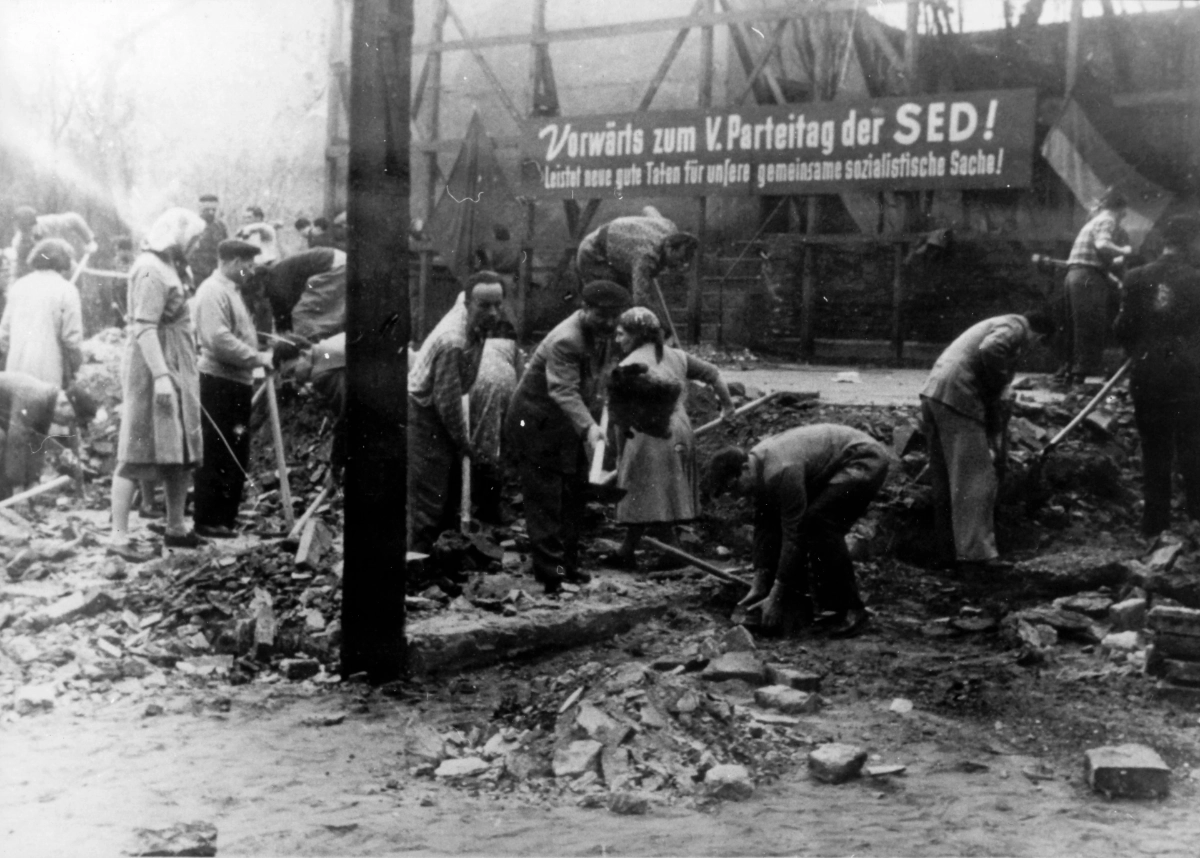
Renovation work at the Prater in 1958. Many volunteer helpers from the Nationales Aufbauwerk (National Reconstruction Committee) are working with tools amid the rubble. In the background hangs an SED propaganda slogan.
Work by volunteer helpers of the Nationales Aufbauwerk (National Reconstruction Committee), 1958. Museum Pankow Archives.

Renovation of the Pratergarten

1958

Over the years, the Pratergarten had fallen increasingly into disrepair, so construction works got underway at the end of the 1950s. A new large open-air stage with a dance floor and new service areas were created, and the old dance hall was renovated and rebuilt. The renovation work was undertaken in part by volunteers from the Nationales Aufbauwerk (National Reconstruction Committee) who contributed over 50,000 hours of their time.

Skat players in front of the new open-air stage at the reopening of the Prater garden on May 1, 1960.
Skat players in front of the new open-air stage at the reopening of the Prater garden on May 1, 1960. Federal Archives of Germany.

Reopening after the Renovation

1960

After extensive renovations, the Pratergarten reopened during the annual May Day celebrations in 1960. One tradition that was then relegated to the past was the century-old tradition of families making their own coffee, with the state-run Handelsorganisation (Trade Organisation) taking on the food and drinks. A multifunctional venue emerged, financed by the borough of Prenzlauer Berg, offering music, dancing, social gatherings, political rallies, sports events and training sessions, as well as the DEFA cinema.

The Open-Air Stage

1960

The open-air stage was part of the reconstruction and renovation aimed at transforming the dilapidated and neglected Prater into a contemporary sports and cultural centre for the working-class district. Designed by architects Wladimir Rubinow and Udo Schultz, it is a particularly fine example of postwar modernist architecture, due to its dynamic form. Unlike the ubiquitous prefab housing architecture of the GDR, cultural buildings were allowed a certain degree of eccentricity – a trait also evident in other well-known works by Rubinow, such as the Stadthalle in Karl-Marx-Stadt (present-day Chemnitz).

After its opening in 1960, the open-air stage boasted a diverse programme of musical and spoken theatre, dance, presentations, and celebrations. Its dynamic design allowed, among other things, for greater audience participation during performances, making it a versatile venue. With events aimed at all generations, it was an inclusive and engaging venue.

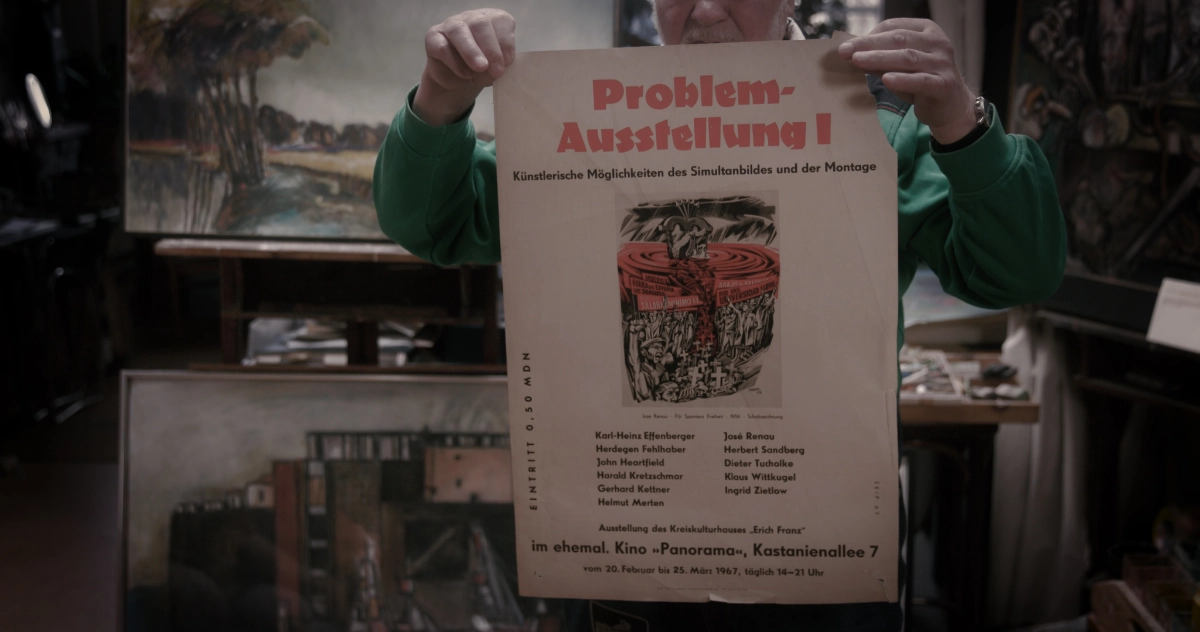
Skip Pahler holds up the poster for the gallery's first exhibition in 1967 in his studio.
Skip Pahler with the poster for the gallery’s first exhibition, which initially took place in the former Panorama cinema at the Prater. Film still: Diana Näcke, Susanne Schüle, 2021.

The first gallery at the Prater

1967-1969

Starting in 1967, the Prater became a Kulturhaus (cultural centre) and eventually the Kreiskulturhaus (district cultural centre) for Prenzlauer Berg.

That same year, the artist Skip Pahler opened a gallery directly across from the Prater, believing that art should be accessible to everyone, especially in this workers' district. In addition to artworks, the gallery also displayed sketches, studies and artists' materials and tools. The storefront at Kastanienallee No. 100 was used for exhibitions from 1967 to 1969.

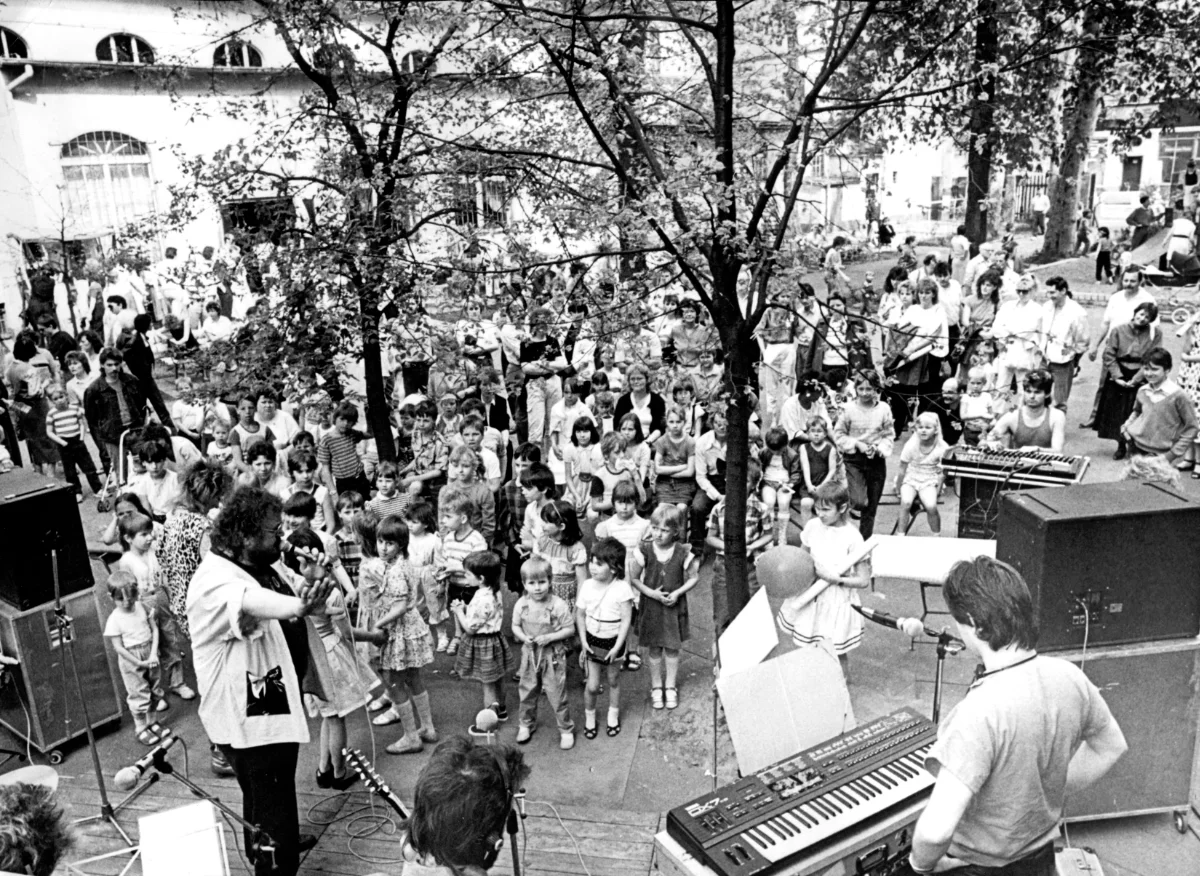
Many children watch the concert on Children’s Day 1986 in the Prater garden.
Concert on Children’s Day 1986 in the Prater garden. Museum Pankow Archives.
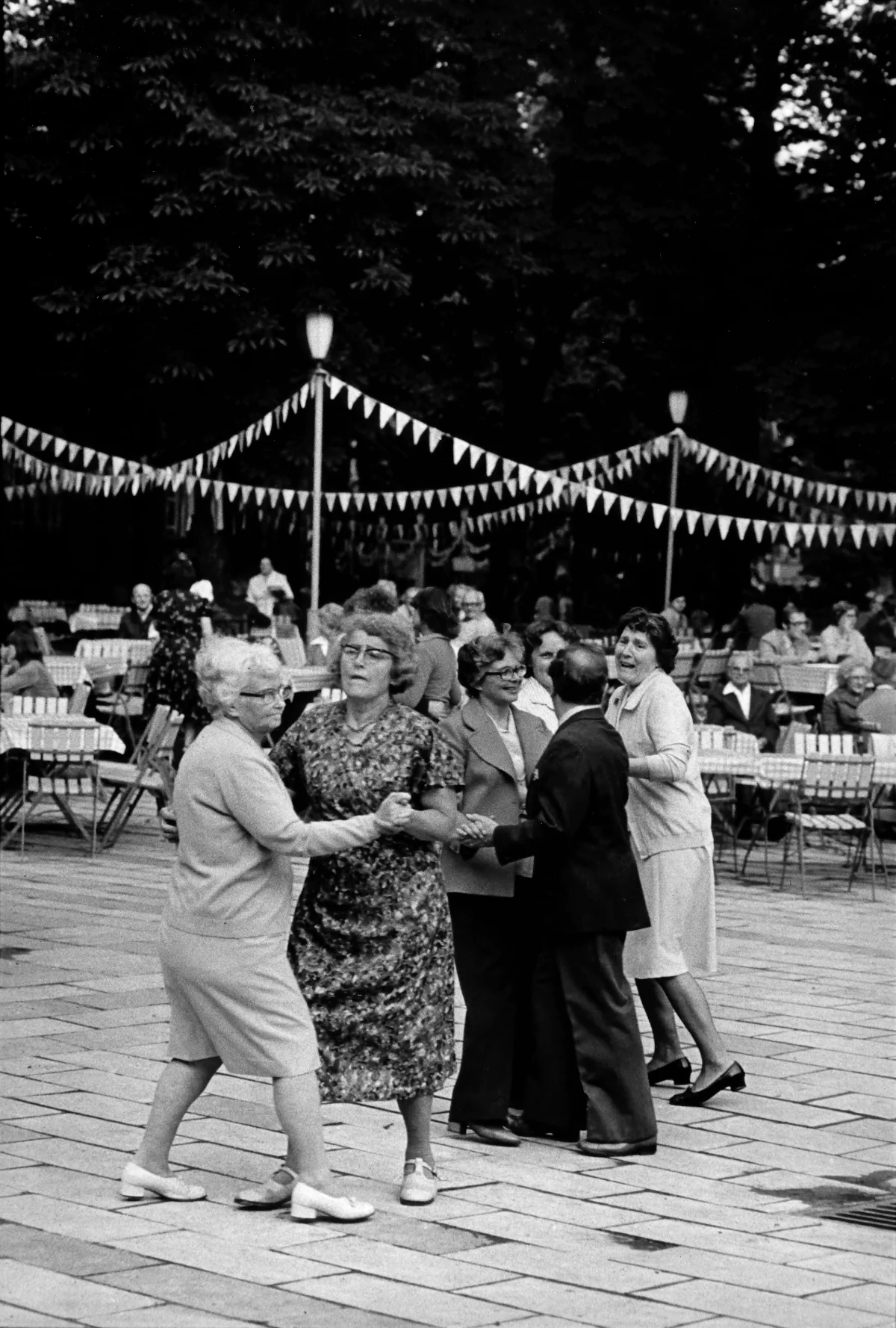
Elderly couples dance in the Prater garden. In the background, the tables and chairs of the beer garden can be seen.
Dancing in the Prater garden, around 1980. Museum Pankow Archives.

The Kreiskulturhaus

1967-1986

The Kreiskulturhaus (district cultural centre) offered a wide range of events: In addition to youth dances and brass bands for older people, there were fashion shows and sporting events, including judo, weightlifting, and boxing tournaments. With children's programmes, events for senior citizens, afternoon women's groups, and cultural events for workers, there was something for every age group and target audience. The 40 to 50 amateur art groups of the district also found space in the Prater for their rehearsals and performances. Over the years, visitor numbers steadily increased until the Prater could no longer accommodate the crowds. In the spring of 1986, a large portion of the cultural activities was relocated to a new cultural centre in Ernst-Thälmann Park.

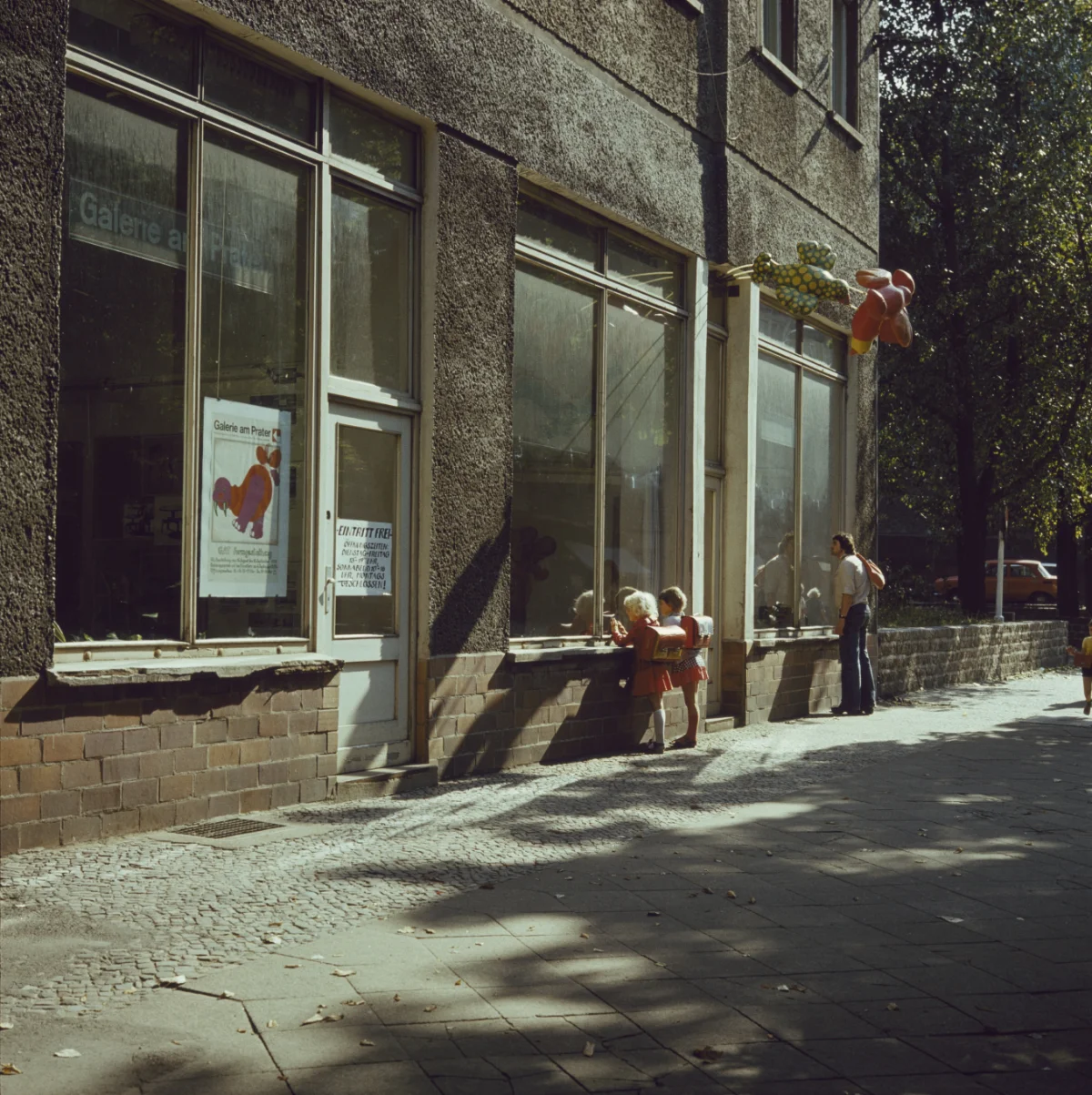
Two children and a man look through the shop windows into the gallery space.
GAT exhibition, Galerie am Prater, 1979. Peter Rossa Archives.

Gallery at the Prater

1973-2005

The municipal gallery at the Prater was opened on the initiative of local artist Wolfgang Leber, during the World Festival of Youth and Students in 1973. It primarily provided a platform for young artists, with auctions and sales exhibitions held there. The gallery's day-to-day business was run by local artists who curated and organised the diverse programme.

Construction Work After the Fall of the Berlin Wall

1991-1995

After the fall of the Berlin Wall and reunification, the Prater hosted numerous events involving creatives from both East and West Berlin. Like most of the district's old buildings, however, the Prater was in a state of disrepair. Its future became the subject of intense debate, and privatisation was mooted. After intense discussions, it remained in the hands of the district council but was then closed for several years due to seemingly never-ending construction work. It was only when the Volksbühne, under the artistic direction of Frank Castorf, expressed interest in using the Prater hall that the renovations were finally completed, allowing the Volksbühne to begin operations there in 1995.

Chance 2000 by Christoph Schlingensief

1998

In March 1998, the Prater hosted the inaugural event of the political theatre project Chance 2000 by the performance artist Christoph Schlingensief. Together with many collaborators, he founded a political party of the same name—also known as the Partei der letzten Chance (Last Chance Party)—in a circus tent set up in the Prater. In May, visitors could spend nine days at the Hotel Prora, an impromptu camping ground on the Prater site, intended to "offer both recreation and agitation, switching off from everyday life" as well as "getting involved in the movement."

Flyer for the one-year anniversary of Femmes with Fatal Breaks on September 16, 2000, at 10 pm in the Bastard club.
Flyer for the one-year anniversary of Femmes with Fatal Breaks, 2000. Photo: Claudia Reinhardt. Ina Wudtke Archives.

The Bastard Club

1999-2007

In addition to the Volksbühne, the Bastard Club was also based at the Prater between 1999 and 2007. The manager was one of the co-founders of the club Maria am Ostbahnhof – and the much smaller club on Kastanienallee was dubbed Bastard, as the offspring of Maria so to speak. The audience was a mixed bunch, with upcoming cultural influencers, BIPoC artists, as well as the old regulars at the Prater. Among others, the DJ/MC collective FEMMES WITH FATAL BREAKS performed there. Under the title Vollversammlung (General Assembly), they specifically invited female-presenting DJs to play at the Bastard Club.

Guestbook of the Prater Gallery with the flyer for the exhibition „Jetzt hier” (“Now Here”, 2005).
Guestbook of the exhibition Jetzt Hier (Now Here), 2005. Photo: Moritz Haase.

The Prater Gallery

2005-2007

In 2005, renovations of Kastanienallee No. 100 were undertaken, and the Galerie am Prater had to move out. The first exhibition after the move to the Prater building across the road took place with the title "jetzt hier!" ("now here!").

Over the following two years, the gallery held another 23 exhibitions at the Prater. In July 2007, the Prater Gallery temporarily closed due to renovation work – after a total of 328 exhibitions.